I called a client last week instead of sending a Zoom link. Just called him. His response: "Oh — I almost forgot that was an option."
That stuck with me. At some point in the last few years, the video call became the default. Schedule a meeting, share a link. Even for conversations between two people who've already met, who don't need to look at anything together, who are basically just going to talk for twenty minutes — the assumption is camera on, grid view, everyone performing.
A voice call is a better choice than a video call for most one-on-one conversations — not because it's old-fashioned, but because it removes the overhead that gets in the way of actually talking. Both people focus on the words. No camera checks, no background adjustments, no one staring at their own face. The connection happens faster. That changes when a group is involved — a distributed team standup, a presentation with shared slides, an all-hands where people need to see each other — but for two people? The camera is usually doing more harm than good.

Table of Contents
The Camera Tax Nobody's Talking About
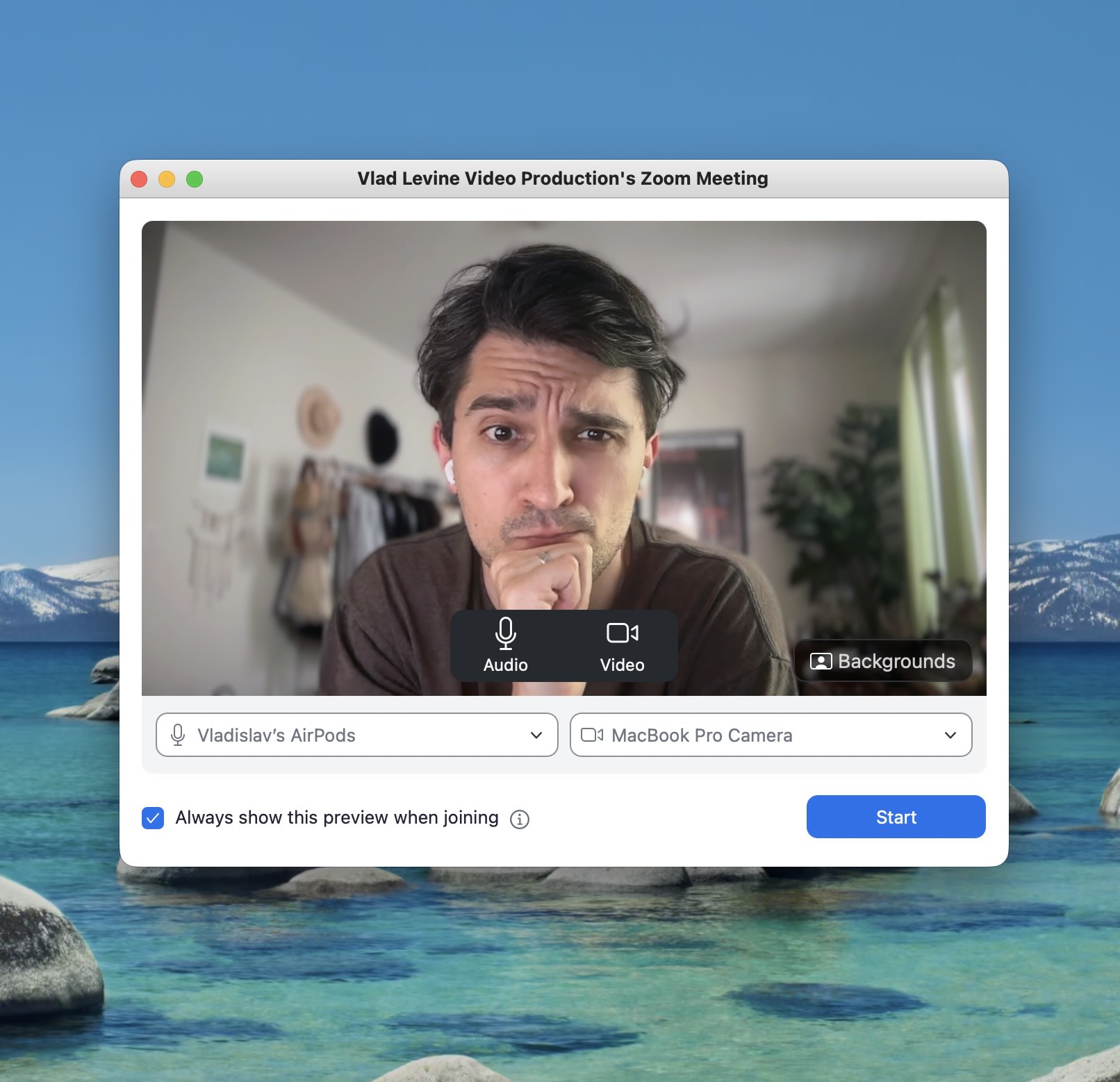
Every two-person video call comes with invisible overhead: you're watching your own face in the corner, tracking their expressions on a compressed grid, staying aware of your background and your lighting and how you're holding your shoulders — all simultaneously, for the duration of the call. A voice call removes every one of those layers. The conversation becomes the only thing you're both doing.
This isn't a small thing. It's the difference between a conversation that feels easy and one that leaves you slightly drained without a clear reason why. The visual channel costs something. Sometimes that cost is worth paying. For two people who just need to talk, it usually isn't.
What I've noticed is that the conversations that actually move something forward — a decision gets made, a concern gets cleared, a relationship shifts — happen on the phone more often than in a Zoom room. Not because the phone is magic. Because focused, low-friction conversation is.
What Zoom Fatigue Actually Is
Zoom fatigue isn't just a polite way of saying you're tired of meetings. It's a specific, documented cognitive effect — and understanding what causes it changes how you make format decisions.
Zoom fatigue is the mental exhaustion that comes from sustained eye contact and self-monitoring on a video call — a format that asks your brain to do more interpretive work than a phone call or in-person conversation because the normal cues for reading another person are compressed, delayed, and distorted. On a screen, you're filling in what the lag cuts off, guessing at tone from a grid of faces, and tracking your own reflection all at once.
The self-monitoring piece is the part that doesn't get said enough. When you can see your own face on screen, part of your brain is running a continuous self-audit. That is not happening on a phone call. You're not thinking about how you look. You're thinking about what to say. That difference, multiplied over forty minutes, is what makes a phone call feel lighter when you hang up.
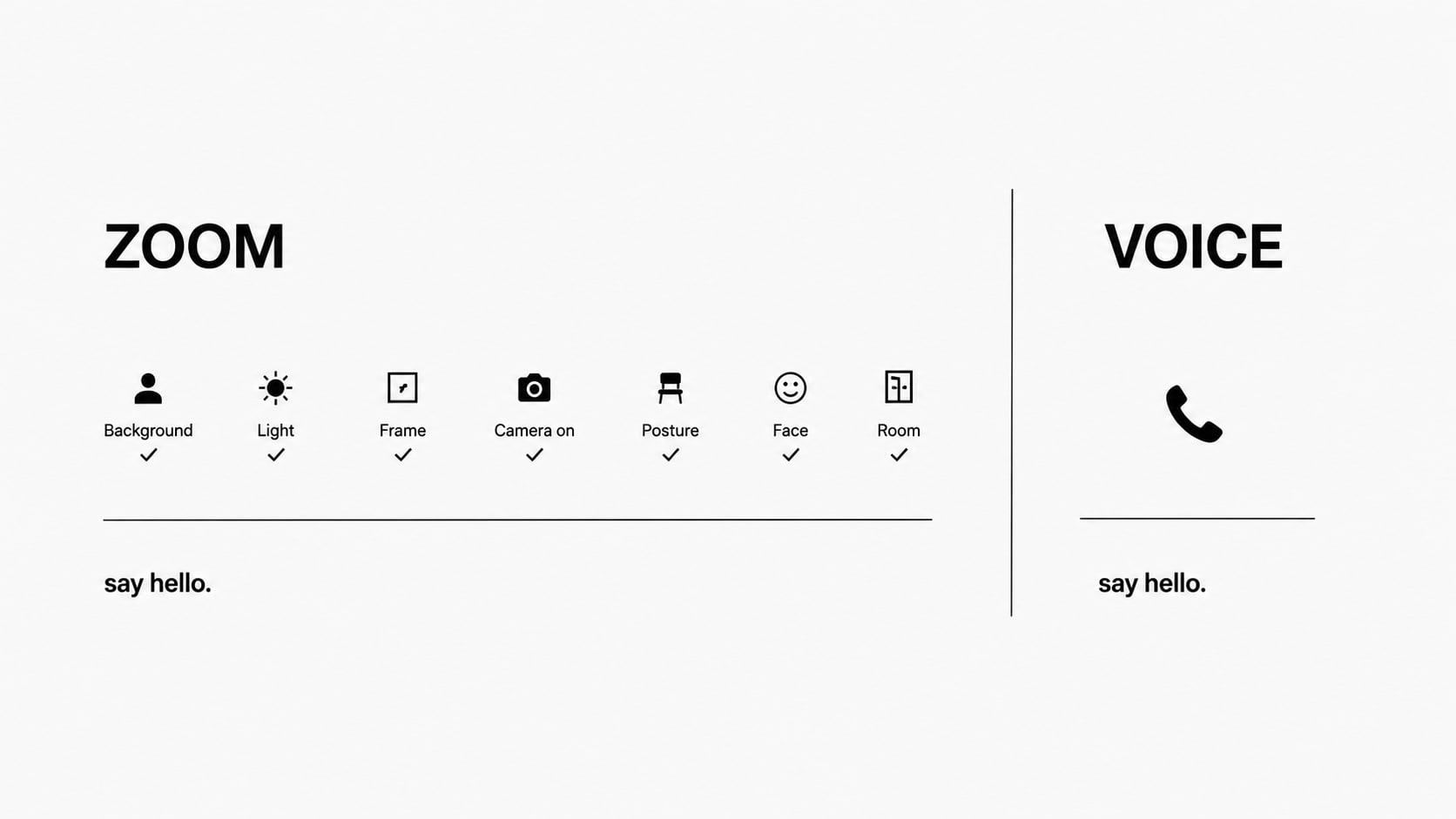
A Phone Call Is Still a Professional Tool
Somewhere in the shift to remote work, the phone call picked up a reputation for being casual — like something you do with your mom, not a client. That's worth pushing back on. A direct call is not informal. It's efficient. And for most one-on-one conversations, it's the higher-quality interaction.
I was going back and forth over email with someone about a project scope question. We'd been at it for three days — replies, clarifications, one thing resolved leading to two new questions. I called instead of writing another message. The call took eleven minutes. Whatever felt murky over email became obvious as soon as we could just talk.
That's not a coincidence. Spoken back-and-forth handles nuance and ambiguity faster than writing does. You interrupt, correct, rephrase, agree. The call compresses what would have taken a week of email into a single focused exchange. You don't need the camera on for any of that.
When Video Makes Sense (and When It Doesn't)
Video calls earn their place when there are enough people in the room, or when the content itself is visual. For a distributed team standup with eight people across three time zones, video is the right format — being able to see faces matters when you're coordinating that many people at once. Same for client presentations, design reviews, any session where someone is walking through something that needs to be seen.
The rule I've landed on: video earns its setup cost when it changes what the meeting can do. If you're showing something, if the visual context matters, if there are enough participants that a grid view helps people feel present — use it. If two people are just going to talk for twenty minutes, think twice about whether the camera is serving the conversation or just adding friction to it.
A note on groups: This isn't an argument against video calls. Large groups — all-hands meetings, workshops, presentations, distributed teams of ten or more — benefit from the visual format. The tradeoff math changes entirely when there are many people on screen. I'm specifically talking about the two-person check-in, the quick one-on-one, the catch-up that doesn't need an agenda. That's where the camera is doing the least work and asking the most of both people.
There's also something to be said for the signal you send when you just call someone. It communicates a directness that a Zoom link doesn't. It says: I have something to say and I'd like to say it to you now. That's not nothing in a work relationship.
Want to keep the conversation going?
I posted about this on LinkedIn — drop a thought there or just reach out directly.
Read it on LinkedInFrequently Asked Questions
Is a phone call more personal than a Zoom call?
Yes — for one-on-one conversations, a phone call is generally more personal than a Zoom call. Without the self-monitoring that comes from seeing your own face on screen, both people focus entirely on the conversation. The cognitive overhead of video drops away and the exchange tends to feel more natural and direct.
What is Zoom fatigue and why does it happen?
Zoom fatigue is the cognitive exhaustion that comes from sustained self-monitoring on a video call — specifically the effort of watching your own face, managing your background, and reading compressed facial expressions on a flat screen. It's not just too many meetings. It's a specific kind of tiredness that phone calls don't produce in the same way.
When should you use a phone call instead of a video call?
Use a phone call for one-on-one check-ins, quick decisions, or any conversation where the content matters more than the visual. Use video when you need shared visuals, group coordination with many participants, or when a client relationship is early and face-to-face context genuinely helps establish the relationship.
Are two-person Zoom calls less effective than phone calls?
For most one-on-one conversations, yes. Two-person Zoom calls add setup friction and cognitive overhead without proportional benefit. Both people are managing their appearance and environment instead of just talking. When there's no shared screen or visual content involved, a phone call almost always gets to the point faster.
Do group video calls still make sense?
Yes — group video calls serve a clear purpose when there are many participants, shared visuals, or distributed team coordination involved. All-hands meetings, client presentations, and workshops benefit from the visual format. The tradeoff math changes significantly when you have ten people on screen versus two.
There's a version of every professional relationship that runs entirely on scheduled Zoom links and typed follow-ups. It's functional. It keeps everyone at a certain careful distance.
And then there's the version where you call someone because you have something to say. No link shared. No calendar hold. Just: I just need to talk to you.